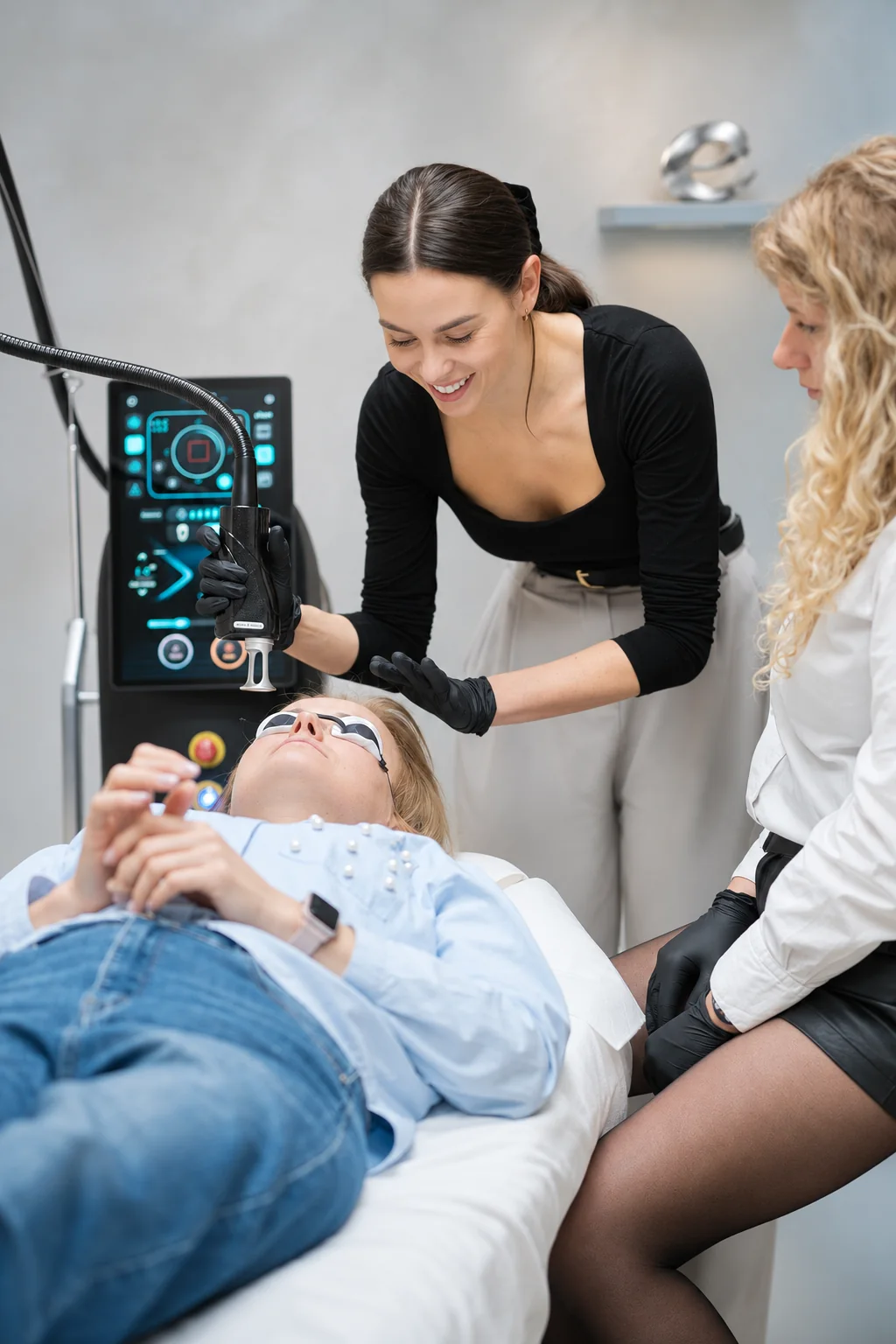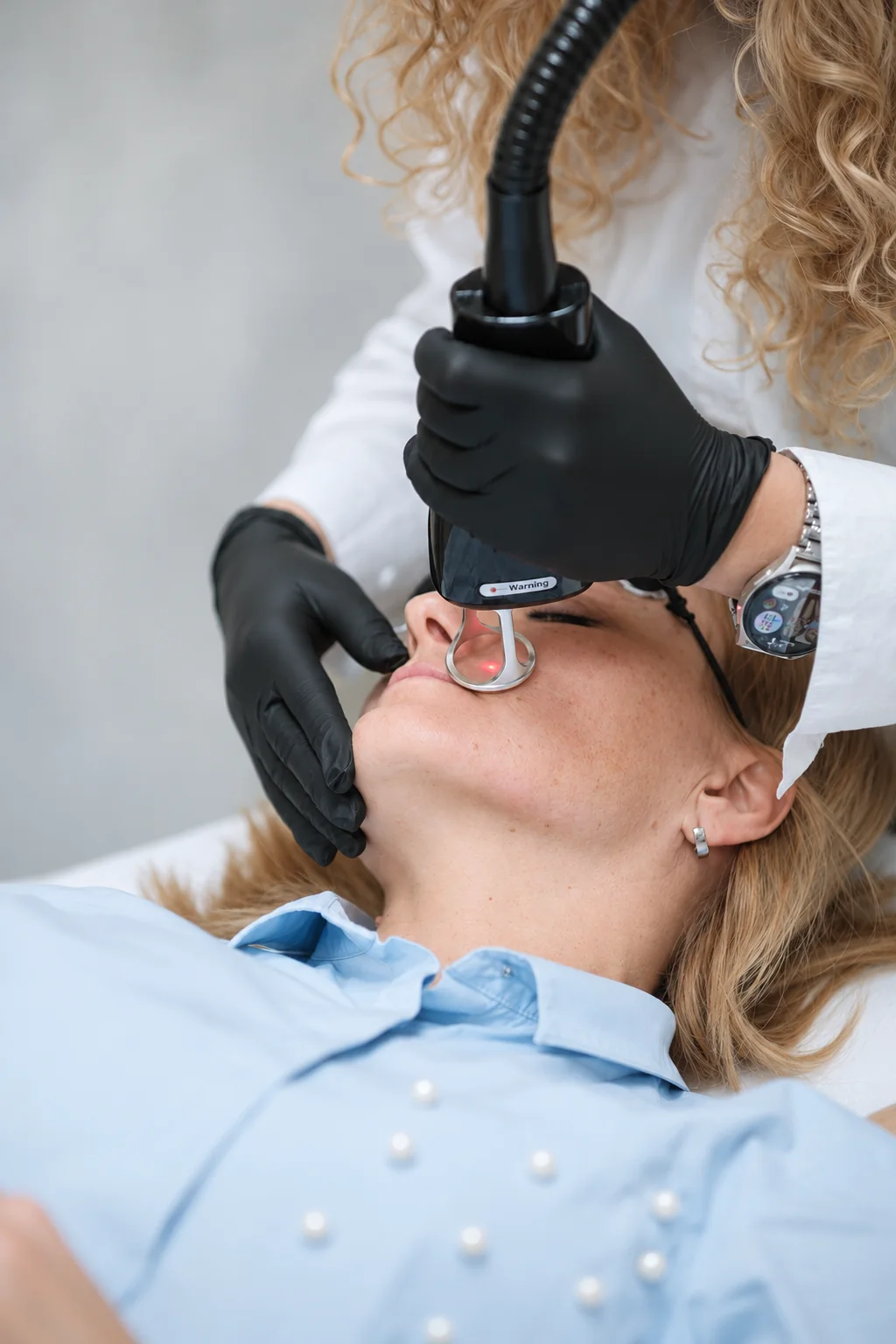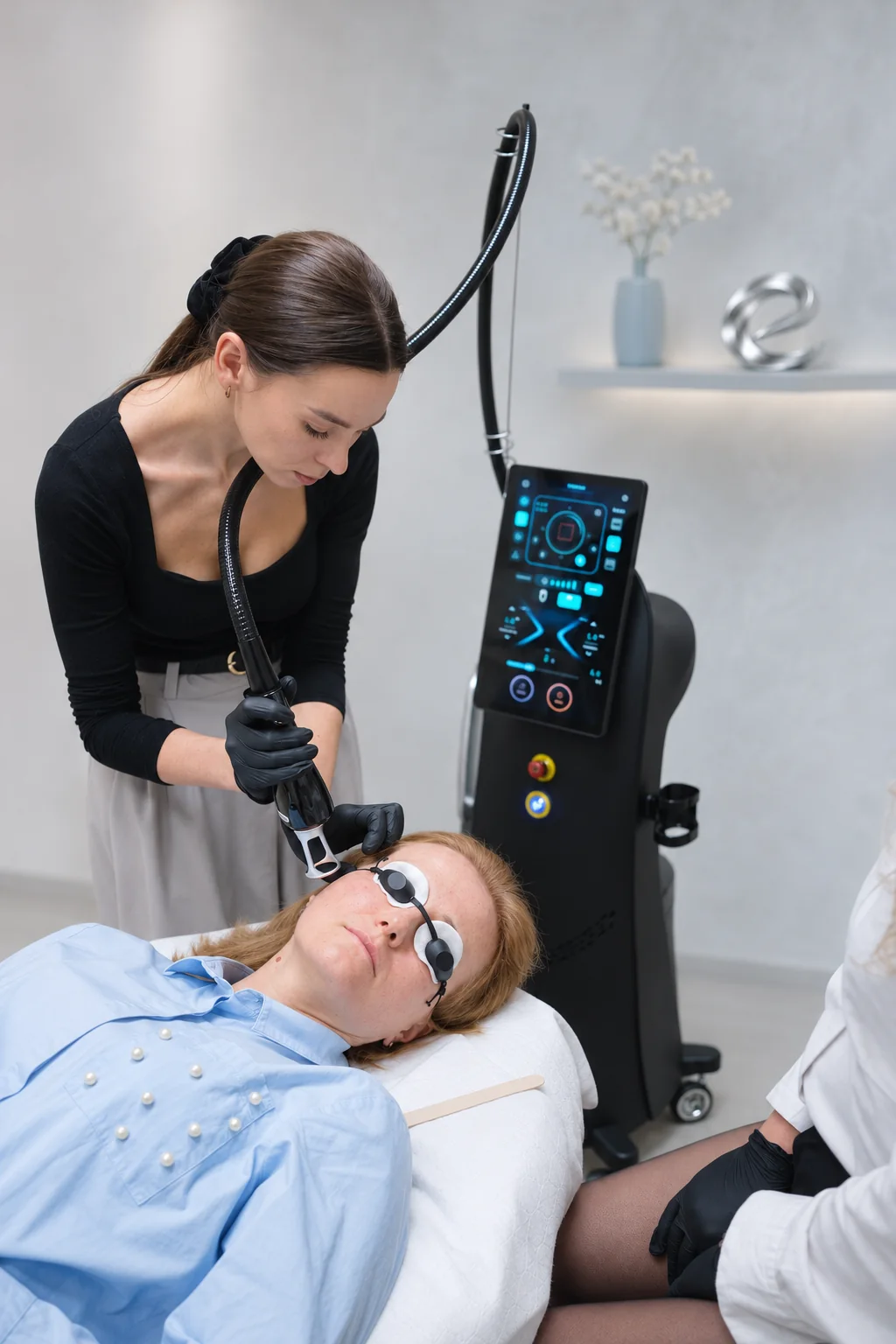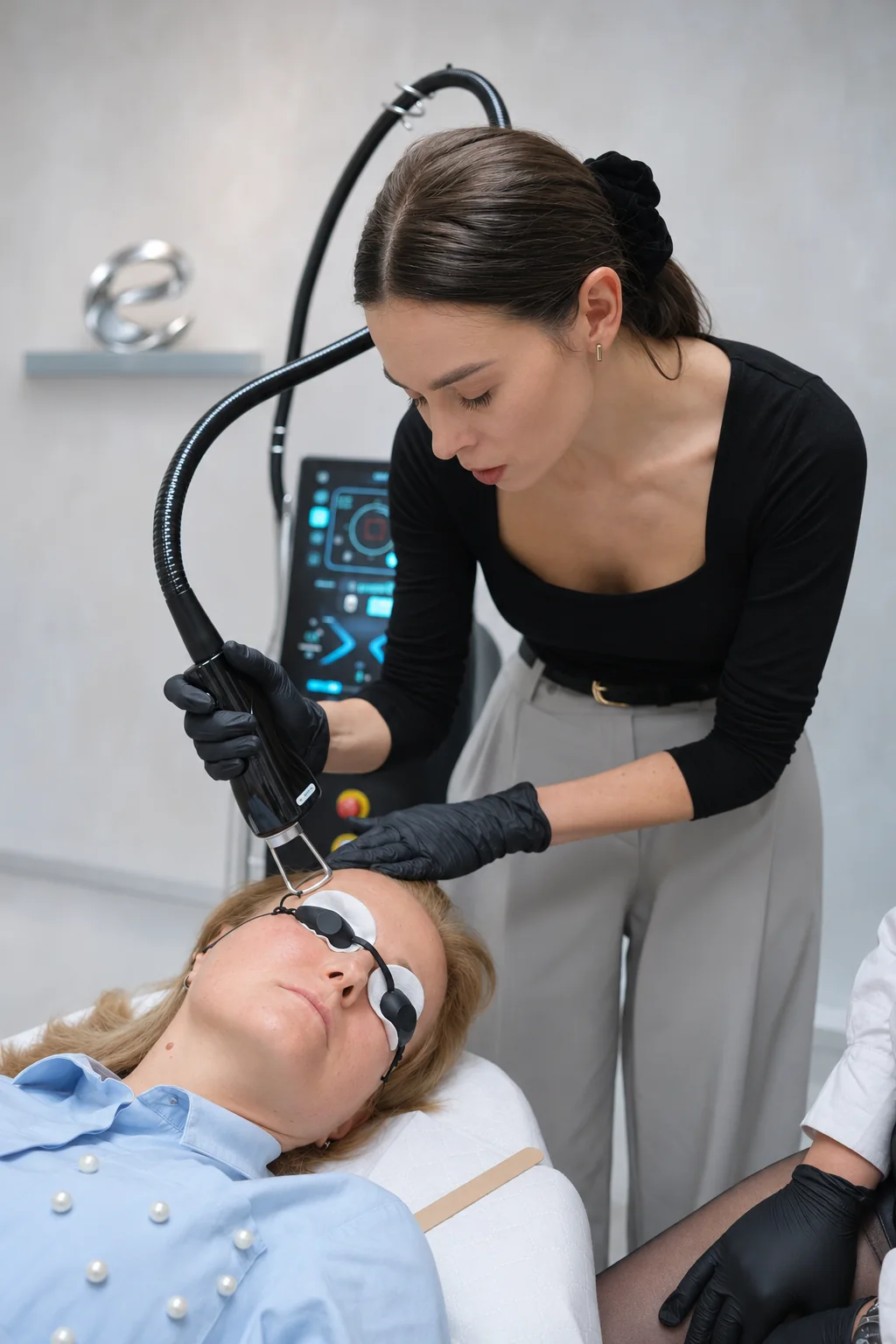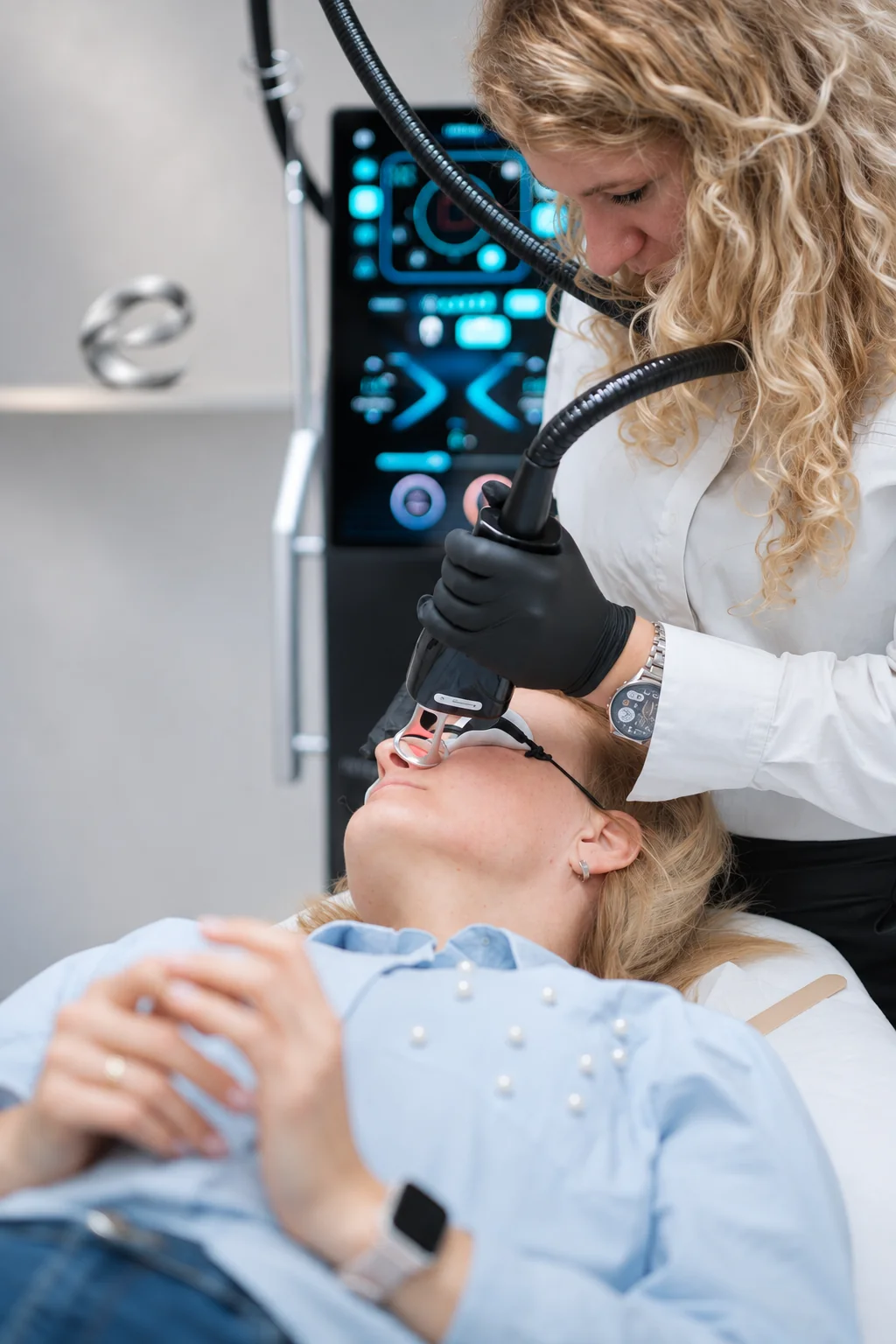
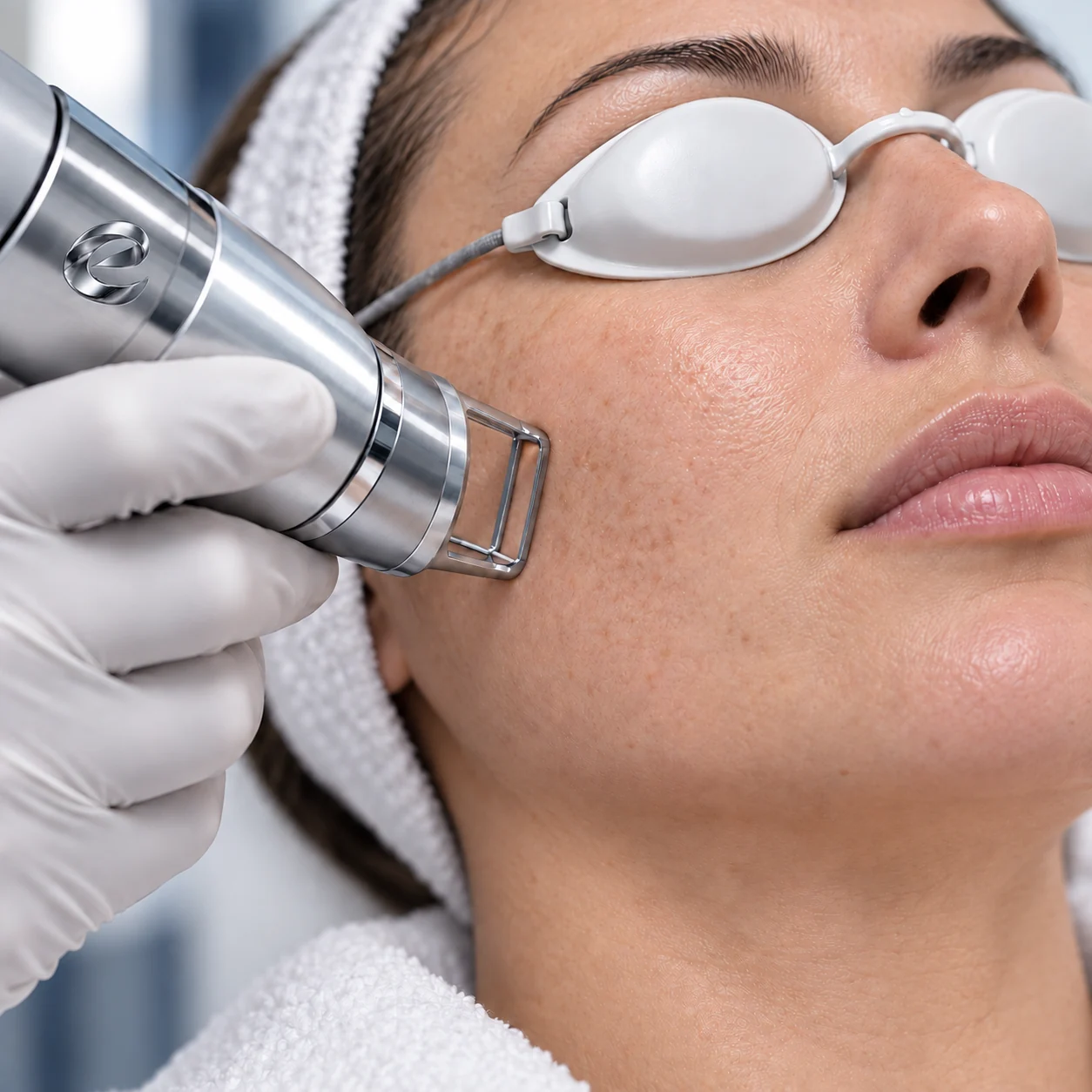
Pigmentation, uneven skin texture, wrinkles and scars call for different approaches. Two wavelengths allow treatment to be adapted to the concerns and needs of your skin.
How do 1927 and 1550 nm differ?
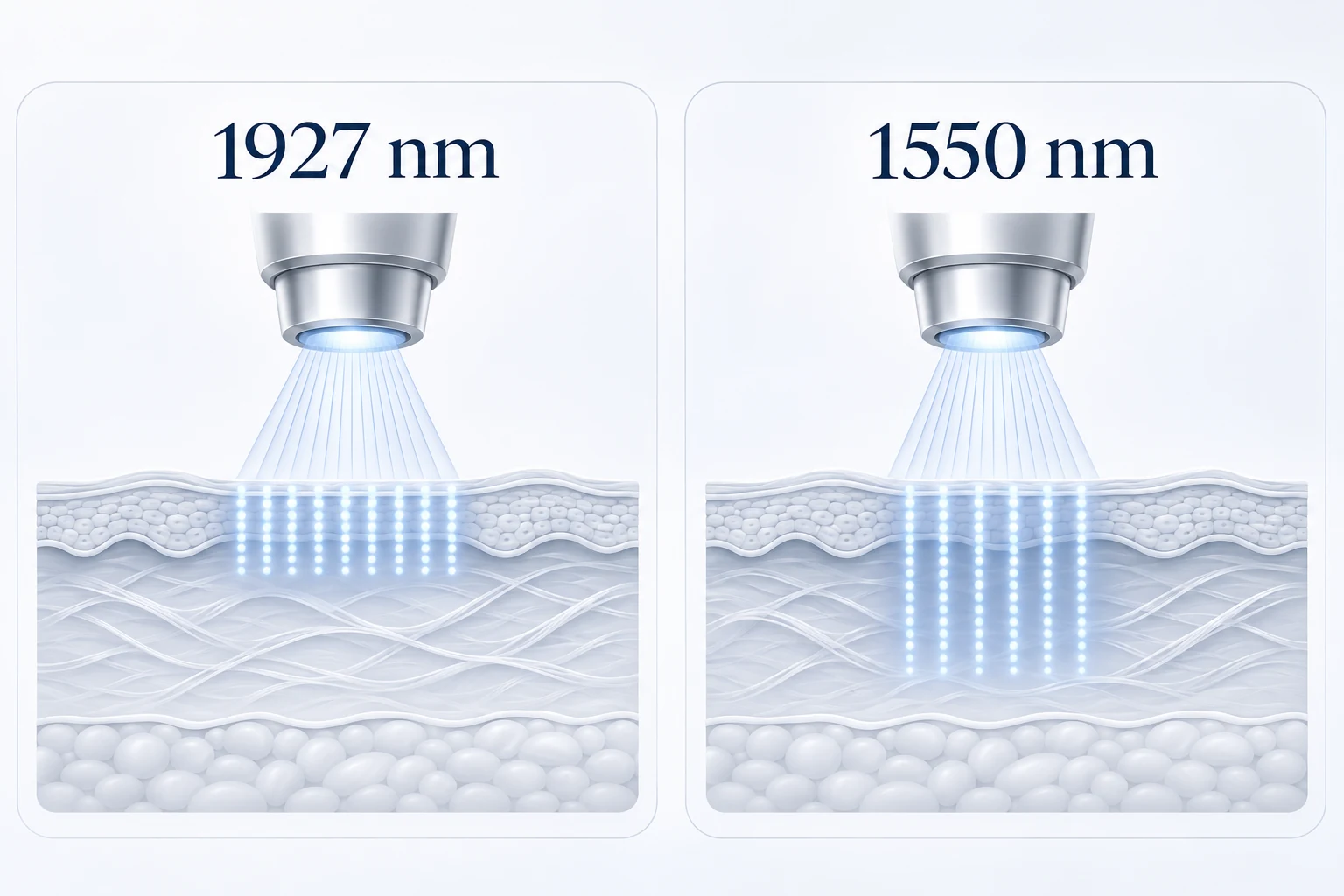
How do the two wavelengths work together?
Fractional treatment delivers energy to microscopic zones of skin, leaving tissue between them outside the direct action of the beam. In non-ablative mode, this produces zones of heating and coagulation rather than open channels created by vaporising tissue. The surrounding skin supports recovery.
Water is the main chromophore, or energy absorber, for both wavelengths. It absorbs 1927 nm more strongly, resulting in more superficial action. The 1550 nm wavelength can reach deeper into the dermis and initiate collagen remodelling. It does not completely bypass the epidermis or selectively target fibroblasts alone.
The two ranges can complement each other: one addresses tone and the skin surface, while the other addresses texture and the appearance of scars and wrinkles. Whether to use one or both wavelengths, in which order and at what settings is determined during assessment. Depth depends on device design, pulse energy and settings; wavelength alone does not define a depth in millimetres.
1927 nm — thulium laser
Acts more superficially. It is used to improve skin tone and reduce selected types of pigmentation, including sun spots. It supports skin renewal and an improved appearance.
1550 nm — erbium-glass laser
Reaches deeper into the dermis. It creates controlled microscopic zones of thermal action, stimulating skin remodelling. It is used to improve texture and reduce the appearance of wrinkles and acne scars.
Choosing the settings starts with a consultation.
Before treatment, we assess your skin, discuss the results you hope to achieve and check for contraindications. Treatment scope, the number of sessions and aftercare are agreed individually.
Preparing for treatment
- Before booking: prepare a list of medicines, supplements and skincare products. Mention recent procedures, chronic conditions, a tendency to keloid scars and any history of cold sores.
- Protect your skin from the sun: avoid tanning, sunbeds and self-tanners. Use sun protection, preferably SPF 50+. Report a recent tan or sunburn before your visit.
- Agree your skincare plan: breaks from retinoids, acids and exfoliating procedures are decided individually. Use gentle cleansing and moisturising and avoid irritation.
- Do not stop medicines on your own. This includes isotretinoin, anticoagulants and products affecting skin sensitivity. Changes to prescribed treatment must be decided by your doctor.
- If you get cold sores: a doctor may recommend antiviral prevention. Do not start it on your own.
- On the day: arrive without makeup on the treatment area and report new skin changes or illness. Anaesthesia, appointment length and preparation will be discussed beforehand.
Contraindications and situations requiring consultation
Postpone treatment if you have an active skin infection, including cold sores, open wounds, sunburn or significant irritation in the treatment area. A suspicious pigmented lesion or an unexplained skin change needs dermatological assessment first.
Before assessment, also disclose:
- pregnancy or breastfeeding;
- active skin disease, such as an eczema, psoriasis or rosacea flare;
- a tendency to keloids, poor healing or pigmentation changes after previous procedures;
- diabetes, autoimmune disease, immune or clotting disorders;
- current or recent isotretinoin, photosensitising medicines, immunosuppressants or anticoagulants;
- allergies, especially to anaesthetics, and recent procedures in the same area.
This list does not replace individual assessment. Suitability depends on your history, skin examination and the specific device manufacturer's instructions. Medical consultation may be required.
Recovery and results
Redness, swelling, warmth, roughness and peeling may occur after treatment. Their duration depends on the settings and your individual response. Do not pick peeling skin and follow the aftercare instructions provided. Skin remodelling continues over the following weeks; session numbers and intervals are determined individually.
Treatment is not risk-free: pigment changes, infection and scarring are possible. Increasing pain, blisters, discharge or fever require contact with your treatment provider or doctor.
Frequently asked questions
How much does a visit cost and how long does it take?
For the current price, treatment scope and duration, contact our staff on 665 082 305.
Does choosing a time confirm my appointment?
No. Your request awaits staff confirmation. We will contact you to agree the time and price of your visit.
Laser treatment at Expelos